Energy advisory · On the buyer's side · Australia-wide

The client asks what they should do. The market answers with what it has to sell.

We're not an installer — we don't design or build the system. Businesses come to us because solar only works when it's matched to how a site actually uses power, in a market that resets every six months. We do the analysis, build the plan, run the procurement, oversee delivery, then report on whether it did what we said it would.

Buyer-side.
We sit on your side of the table, never the installer's.
First deliverable, no capital.
A tariff and retail contract review that often finds money before a panel is installed.
Reported against model.
We tell you whether the system did what we said it would.

Why unbiased

Unbiased advice, and an honest account of how we're paid.

Executives reviewing an energy feasibility report in a boardroom

“I can't tell you yet whether this makes sense for you. Anyone who can, before seeing twelve months of your interval data, is guessing. What I can tell you is exactly what we'd need to find out.”

— Matt Cooper, Founder

Most firms in this market call themselves independent. We won't, because it wouldn't be true. We hold relationships with vendors we've worked with and rate, and we take a margin on supply. What we are is unbiased: the recommendation follows the analysis, and you are never locked in. If you have your own installer, we manage them exactly the same way. On anything of scale it goes to open tender — and the best bid wins, ours or otherwise.

  1. 01

    Unbiased, and never locked in

    Own installer, own tender, or our supply chain — we do the same work either way, and the recommendation doesn't change. You are under no obligation to use anyone we introduce.

  2. 02

    Australian scheme depth

    Network tariffs, connection requirements and the state incentive schemes — which changed twice this year. We track them because a 20-year capital decision made on last year's rules is an expensive mistake.

  3. 03

    Built to survive a CFO

    Modelling with its assumptions stated and its sensitivities shown, in a document your contact can take into a board room and defend. Real risks named, not buried.

  4. 04

    Access, and price knowledge

    We know who's genuinely good, who's about to fall over, and who to put on a difficult roof. And we know what things should cost, because we buy a lot of them — which is what lets us tell you whether the quote in front of you is fair, whoever wrote it.

  5. 05

    Pull after handover

    The part clients underrate until it bites. A one-off buyer has almost no pull the day after commissioning. We hold relationships a vendor wants to protect, so our jobs get prioritised and our calls get returned — which matters most when something has gone wrong.

  6. 06

    “Not yet” is a real answer

    Sometimes the right advice is to spend less, wait for the network application, fix the roof in the next capital cycle, or do the tariff work first because it costs nothing. We're not trying to close something this month.

Our approach

From first conversation to measurable outcomes.

Our methodology mirrors the standards of the best professional services firms. We do not rush to solutions — we build understanding first, then advise with rigour.

Start the Conversation
  1. 01 Discovery

    Listen & understand

    Your operations, constraints, priorities and risk appetite. No two clients are identical — neither is our advice.

  2. 02 Analysis

    Analyse & evaluate

    Rigorous technical and financial modelling. Multiple scenarios, stress-tested assumptions, options measured against your criteria.

  3. 03 Decision

    Advise & recommend

    Clear recommendations with transparent assumptions and trade-offs — built for board-level scrutiny.

  4. 04 Delivery

    Support & implement

    Procurement, contract negotiation, project oversight and quality assurance — engaged until outcomes are achieved.

  5. 05 Ongoing

    Review & optimise

    Performance monitoring and reporting. We track markets, technology and regulation so your strategy evolves with your business.

What we do

Six core capabilities — the spine of every engagement.

Buyer-side advisory across the full arc of a commercial energy decision — from the first tariff question to a system reported against the model we built.

Start here

Start with a tariff review.

Before anyone talks to you about capital, we'll check you're on the right tariff. It's the fastest money available and fixing it costs nothing. Send us twelve months of bills and interval data and you'll know quickly what kind of adviser we are — sometimes our first deliverable saves a client money without a panel being installed.

Start with a tariff review
  1. 01

    In-depth analytics

    Full interval data, every tariff component, every site — not a monthly total and not one bill. It gets more valuable the more complex the client: two sites with identical annual usage can have effective rates 8c/kWh apart, which changes the answer entirely.

  2. 02

    Advisory — plans, not purchases

    We work with businesses over years toward their actual goal. A plan can legitimately say not yet. A client told “not yet” who finds out we were right becomes a client for a decade.

  3. 03

    Project management

    What was ordered gets delivered, and what gets delivered works. The substituted panel model, the inverter count that doesn't match the design, the export limit set wrong at commissioning, the monitoring never handed over, the meter reconfiguration nobody chased.

  4. 04

    Grant & incentive navigation

    Every scheme claimed, including stacked state and federal ones, and installs timed against step-down dates. Plus pass-through verification — checking the certificate value on a quote against what those certificates were actually worth on the day.

  5. 05

    Reporting

    What was promised, what was delivered, what it is actually doing — ongoing, in a form finance and sustainability can use. This is where most solar relationships end and ours begins.

  6. 06

    Industry relationships

    Access, price knowledge, and the standing to keep a vendor responsive after the sale — plus the confidence that comes from an installer knowing we'll spot a design that's wrong.

Also in the toolkit

Seven supporting capabilities.

  • Competitive procurement — a proper tender, with responses normalised so they can be compared like with like. Solar quotes are often deliberately not comparable.
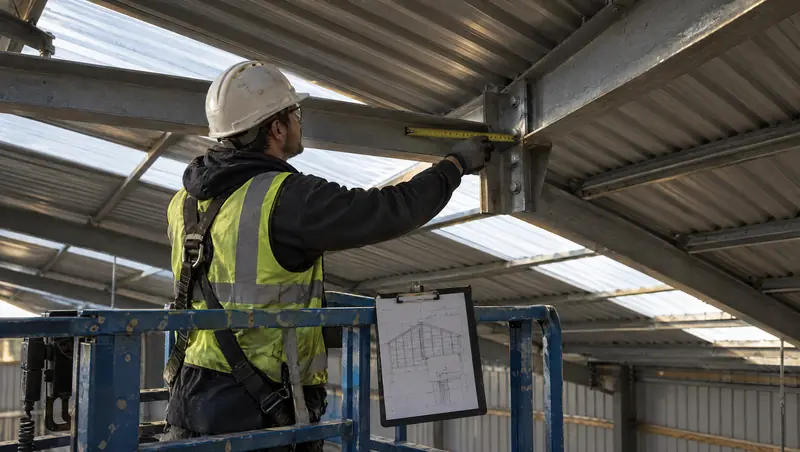
  • Technical due diligence — interrogating the design and the model before anyone signs. Are the yield assumptions defensible, is the self-consumption rate realistic, is the structural work priced, does the claimed saving survive contact with the real tariff.
  • Contract & warranty risk — what is actually warranted versus implied, who carries performance risk, and what happens to a 25-year warranty when the installer who wrote it is gone in three.
  • Tariff & retail contract review — often the fastest money in the room, and it needs no capital.
  • Building the internal business case — a document that survives the room our contact has to present it in.
  • Funding model comparison — capex, lease, PPA, green finance, compared on the client's numbers.
  • Institutional memory — over five years and multiple sites, we are the one party that still knows why site 7 was skipped and what the network said about site 12.

Who we advise

Advice in the language of business, not just kilowatt-hours.

CEOs & Managing Directors

Board-level clarity on energy as strategic risk and competitive position — not just an operational line item.

CFOs & Finance Directors

Detailed financial modelling, scenario analysis and funding strategies that stand up to scrutiny.

Directors & Board Members

Governance-grade advice on energy policy, decarbonisation commitments and ESG reporting.

Facility Managers

Practical, implementable recommendations that fit within existing operational frameworks.

Operations Managers

Energy interventions that enhance production efficiency and uptime — never disrupt it.

Sustainability Managers

Credible, measurable pathways to net zero that align with organisational capability.

Property Managers

Better building energy profiles, lower outgoings and stronger asset marketability.

A consultant reviewing a printed energy report at a desk

About BEDA Energy Consulting

An advisory firm built on rigour, not hype.

Our mission is simple: unbiased, rigorous, commercially sound energy advice that helps Australian organisations reduce costs, manage risk and transition to more sustainable operations — without pressure and without hype.

Founder

Matt Cooper

Matt Cooper started BEDA. He began as an electrical apprentice in 2008 and built his career across commercial solar and energy efficiency — as a senior business development manager at one of Australia's largest energy efficiency and solar retailers, and helping build another of the majors from scratch. He has run end-to-end project management on large-scale commercial and national rollouts, negotiated commercial energy contracts on the retail side, worked with a range of major clients, and managed substantial engineering teams — overseeing the delivery of more than 2,700 commercial projects.

He built BEDA to close a gap he kept seeing: genuine clarity and honest servicing in this space are hard to find.

Common questions

How we work, explained.

Straight answers about how we work — and what to expect from your first engagement.

Ask Us Directly
What does an energy advisory engagement involve?

Every engagement follows our five-stage methodology: we start by understanding your operations and priorities, apply rigorous technical and financial analysis, present clear recommendations, support implementation through procurement and project oversight, and stay engaged to report on performance. The scope flexes — from a focused tariff or proposal review to a multi-year retained advisory role.

We already have proposals from installers. Can you review them?

Yes — proposal review and due diligence is one of our core capabilities. We assess system designs, equipment specifications, pricing structures and contract terms, compare multiple proposals on a like-for-like basis, and identify technical, financial and operational risks before you commit — so you negotiate from an informed position.

What about payback — what number should we expect?

We don't lead with a payback number, because an honest one doesn't exist until we've seen twelve months of your interval data — and anyone who gives you one before then is guessing. When we do model it, it's a range with its assumptions stated: commercial solar commonly lands at three to five years, faster on sites that use most of what they generate; batteries are usually longer, unless demand charges do the heavy lifting.

Can you work alongside our preferred installer or contractor?

Absolutely. We regularly work with a client's chosen delivery partners — managing the tender, reviewing designs, negotiating contracts and providing quality assurance through construction and commissioning. Because we sit on your side of the table, every vendor is held to the same standard.

How does an engagement start?

Usually with a tariff review. Send us twelve months of bills and interval data and we'll check you're on the right tariff before anyone talks about capital — it's the fastest money available and fixing it costs nothing. From there we scope the analysis you actually need, whether that is a single proposal review or a multi-year energy roadmap.

Start with a tariff review

Ready to make your next energy decision with confidence?

Tell us where you are — first feasibility question, a stack of vendor proposals, or a net zero commitment with no roadmap. Send us twelve months of bills and interval data and we'll start with the fastest money in the room. We'll bring the analysis.

Australia-wide service · Based in Sydney